Getting Your IR Spectra Right for Quartz Glass Additives
Here is the problem with standard infrared lamps: they’re generic. When you’re working with doped quartz or glass with specific chemical additives, those off-the-shelf heaters usually miss the mark. If your lamp isn’t hitting the exact absorption peaks of your material, you’re basically just heating the air. It’s a waste of power and a waste of time. We fix this by tuning the spectral output so it actually talks to the molecular vibrations of your specific glass chemistry.
It’s All About the Fingerprint
Every additive in quartz glass has its own “fingerprint”—a specific wavelength where it’s most hungry for energy. We play around with the filament composition and the doping of the quartz envelope to shift the emission curve. When we align that peak intensity with your additive’s absorption peak, the heat actually gets in. It stops that frustrating cycle where the surface of the glass gets scorching hot and cracks, while the core is still freezing.
The Trade-offs (Because Nothing is Free)
Now, here’s the thing: you can’t have it all. If we narrow the spectrum to hit a high-absorption band, you’ll lose some of the total radiant power you’d get from a broad-spectrum lamp. It happens. You’ll just need to keep an eye on your cycle times. Since the overall heat flux drops when we get that specific, you might want to pack more lamps into the setup or move them a bit closer to the workpiece to keep your production moving.
Making it Work in Your Shop
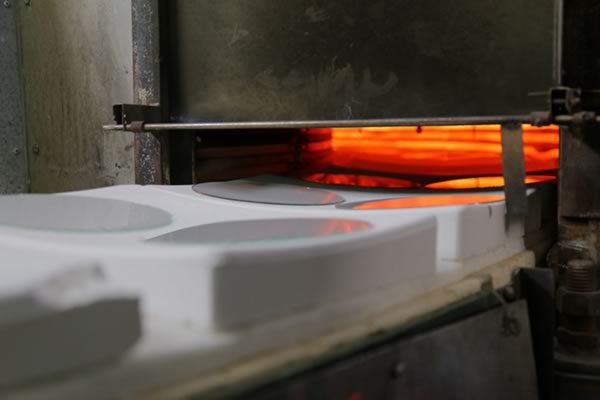
We build these to be simple. They should drop right into your existing IR ovens or fit into a custom research rig without a headache. Whether you need a short-wave peak for a quick surface cure or a mid-wave profile to soak the heat deep into the core, we spec the filament and gas fill to get you there. Just send over the absorption spectra for your additives. We’ll take it from there and build a lamp that actually couples with your material.