



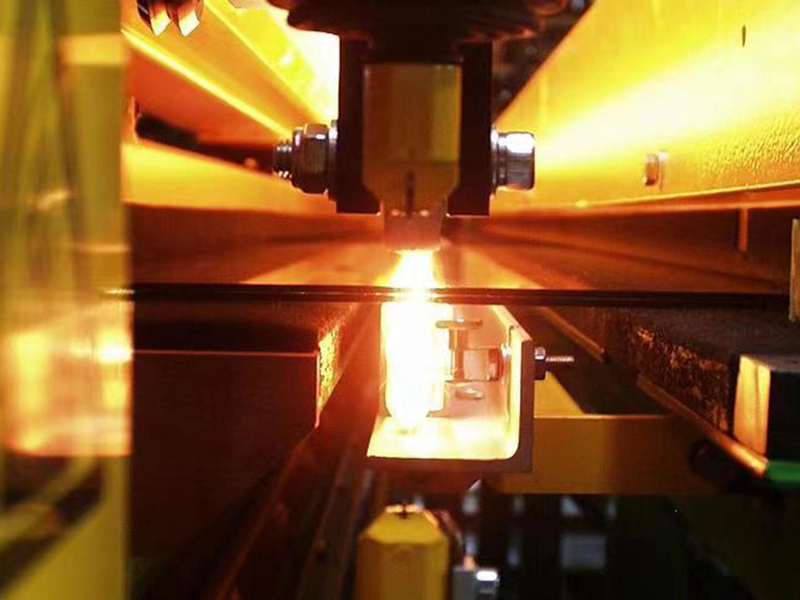
On the line, the oven is the heartbeat. If one hot zone drifts even 10°C, you can push a sheet past its annealing limit. Then you spend the whole shift chasing optical distortion and thermal stress fractures. When the heater underperforms, you lose throughput, you lose yield, and you lose faith in the process. We build and supply glass oven heaters for plants that need repeatable temperature control in the grind of continuous production. This isn’t just a heat source. It’s the thermal backbone for annealing, tempering, bending, coating drying, and the controlled heating that keeps insulating glass sealing consistent.
What matters, technically
In glass processing, heat delivery comes down to stability, distribution, and response. We match industrial heating elements to the emissivity and absorption profile of glass, so you get a stable radiant field and predictable convection behavior. Depending on the oven design and the process profile, we spec quartz tube elements, short-wave or medium-wave infrared, halogen, or carbon fiber emitters. The choice always comes back to the ramp rate you need, the temperature uniformity tolerance, and how the heating zones are laid out. We set key specs for the plant floor, not the lab:
- Temperature control: Closed-loop control holds setpoint stability across the hot zone. That matters in annealing and stress relief, where thermal history directly sets residual stress.
- Uniformity: We engineer zone-to-zone uniformity with element layout, reflector geometry, and airflow management to avoid hot spots that drive bending inconsistency and tempering non-uniformity.
- Response time: Fast ramp capability keeps high-throughput tempering and bending schedules moving, cutting idle time between changeovers.
- Power and voltage: Configurations are available to match your supply—standard industrial voltages or dedicated three-phase layouts—sized to the oven chamber volume and load density.
- Physical integration: Element dimensions, mounting hardware, and terminations are designed for drop-in replacement into OEM ovens or modular retrofits, so downtime stays minimal.
- Duty cycle: Components are rated for continuous operation, with thermal mass and cooling provisions that keep performance steady through repeated heating and cooling cycles. We focus on controllability because glass is sensitive to its heat history. A stable profile translates to repeatable optical quality, predictable curvature in bending, and consistent compression in tempering.
Why this works where the work happens
The glass line is a chain of thermal steps. Break one link, and the whole line pays. Fortempering, the oven has to deliver rapid, uniform heating so the glass hits tempering temperature with even thermal distribution. Uneven heating creates variable stress, and that shows up as fragmented break patterns and out-of-spec fragment size. Our heaters provide the uniformity and ramp control needed to hit the target compression profile, shift after shift. Forbending, the oven must bring the glass to the point where it yields without tearing or thinning. The thermal field has to be smooth enough to prevent localized sagging and optical distortion. With controlled radiant heat and predictable convection, the bending dies see consistent glass behavior—fewer scrap sheets, less rework. Forannealing, the oven has to run a disciplined ramp and soak to remove internal stress from forming or cutting. Heater stability during the annealing cycle reduces the risk of spontaneous fracture downstream and makes subsequent steps more consistent. Forcoating drying and curing, the oven needs fast heat transfer without scorching the substrate or boiling off solvents too fast. Infrared and radiant configurations can be tuned to the coating’s thermal window, so you push cure throughput while limiting defects. Forinsulating glass sealing, the oven must heat the edge seal uniformly to activate the desiccant and set the primary seal—without inducing thermal stress that can compromise the secondary seal. Precise heat control supports repeatable seal integrity and long-term durability. In practical terms, you get fewer line stops, fewer off-spec sheets, and less energy wasted on reheat and rework. The oven cycle becomes a predictable asset instead of a moving target.
The things you actually need to know
Glass oven heaters aren’t plug-and-play across every oven. Installation in the real world depends on chamber geometry, airflow patterns, and how the existing control system manages zones.
- Compatibility: If you’re replacing a heater module, share the oven make and model, zone layout, and control strategy. We match element geometry, termination, and mounting so installation stays fast.
- Control integration: The heater performs best when temperature sensors and control logic reflect the actual thermal mass of the load. Sometimes a small upgrade—better sensor placement or controller tuning—buys you a real improvement in uniformity.
- Thermal management: Fast ramp rates mean you need to pay attention to cooling provisions and component thermal cycling. Plan for the mechanical stress of repeated heat-up and cool-down, especially on high-throughput lines.
- Maintenance: Elements and reflectors pick up deposits and degrade over time. Set a routine inspection schedule to maintain emissivity and cleanliness. It’s a small task that prevents big drift.
- The trade-off: High-speed heating boosts throughput, but it also increases thermal cycling on components. We size the heater and controls to balance speed with service life, so you get performance without burning through parts. If you run tempering, bending, annealing, lamination heating, coating drying, or insulating glass sealing, the oven heater isn’t an accessory. It’s the foundation of process control. Spec it with the same rigor you apply to the glass, and the line will reflect that discipline in yield, quality, and uptime.