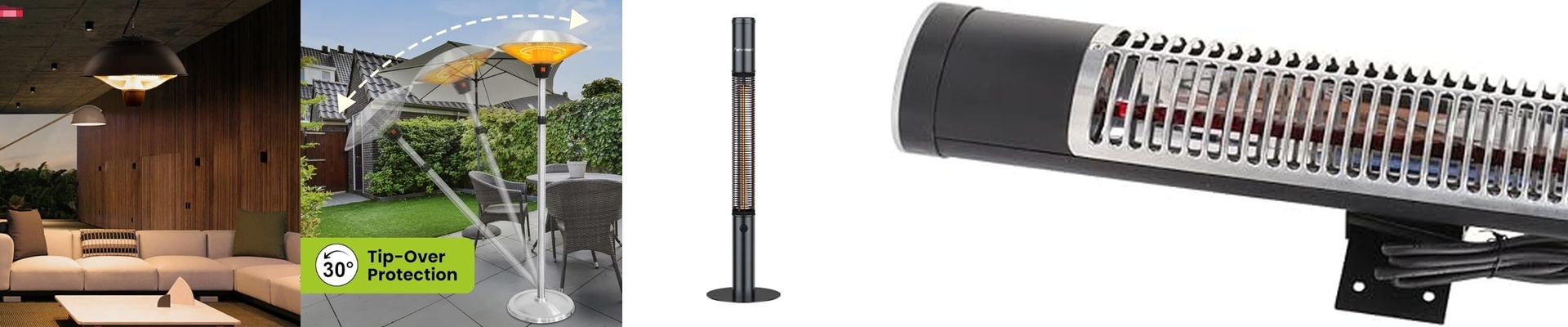

Winter slips in quietly, and with it comes the familiar problem of keeping older folks truly warm—not just the room, but their bones and joints. Forced-air heat can dry things out and leave skin feeling cold, and those sudden blasts of hot air can throw some people off balance. For seniors, comfort comes down to steady, even warmth that supports circulation and easier breathing.
What matters, technically
A freestanding infrared fireplace delivers radiant heat—light that travels outward and warms people and objects directly, the way sun warms you on a cool morning. Inside, you’re looking at a carbon fiber or quartz element producing broad-spectrum infrared warmth, with heat that comes on fast and moves very little air. Many models run on standard household power, often 120V, and include adjustable thermostats so you can hold a consistent, low-level comfort instead of chasing big temperature swings.
Why this works for midlife and senior comfort
This type of warmth feels like “bio heat”—a gentle penetration that loosens muscles and joints without the jarring shift of hot air. For anyone sensitive to drafts, or for those who feel chilled deep in the shoulders and back, infrared helps maintain a more stable body temperature. That can make evenings feel safer and less stressful. The room stays comfortably steady, supporting relaxation and easier movement, without the harsh ups and downs of forced-air heating.
The practical details
Placement matters. For the most even comfort, keep the freestanding unit in an open area with at least three feet of clearance all around, and follow the manual for safe distances from furniture and curtains. Because infrared heats surfaces directly, rooms with high ceilings or drafty windows can still feel uneven unless the heater is positioned to reach the main seating area. And as with any electric heater, choose a model with tip-over protection and an appropriate IP rating for the space.